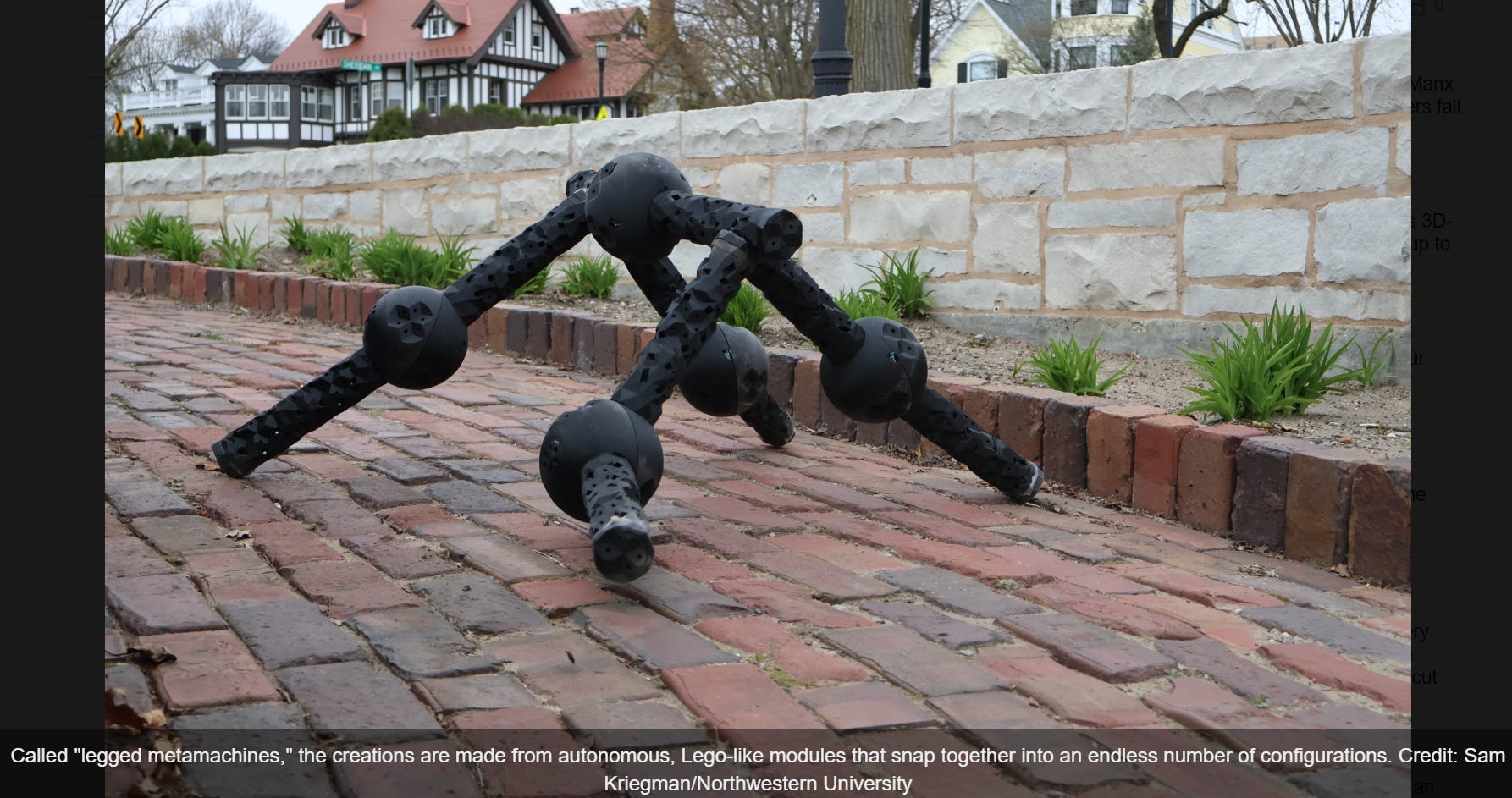
Maybe they can merge this with the king of falls, me. Dang, this is rather terminator like. Read more in And now for something completely different.
Remember H5N1?
The reports keep mounting for our avian friends and the deaths caused by bird flu (HPAI). I would blame them if they went Alfred Hitchcock on us. Are the kiddos running from the birds or Covid?
Since 1970, North America has lost 3 billion breeding pairs out of approximately 9 billion. Planet-wide, between 48 and 61% of bird species are in decline. Now we have new clades of bird flu that are absolutely devastating the wild and domestic bird populations. They are so pissed that they got together and decided to spill it over to mammals, with a specific species that has led to their demise in mind: humans. OK, I made that up, but I would not blame them if they did. Climate change, increased pollution, and human encroachment on their nesting grounds and migration routes. Our fragile ecosystems are heading towards collapse if we don’t get our shit together.
So, after years of neglect, is the USDA about to get serious? On the surface, it appears they might be. I think the government report on the milk supply testing (36% of the milk tested + for H5N1). When they said that around 1% of the herds had been infected, it at least made them lift their heads out of the sand.
Here is an article on the change in strategy. The headline is : ”USDA Triggers ‘Secure Our Herds’ Alert As Mandatory 2026 H5N1 Dairy Testing Threatens Midwest Milk Margins”. Of course, we have to have some economics in the headline. They state first:
The USDA just dropped a regulatory bomb on the American dairy industry. Starting immediately in 2026, the new “Secure Our Herds” initiative completely rewrites the rules of farm biosecurity. Consequently, voluntary pathogen screening is officially a thing of the past. Federal inspectors are now monitoring your bulk tank with unprecedented scrutiny. If you are milking cows today, you must prepare for sudden, devastating herd quarantines.
So are the quarantines “devastating”? Here is where the skeptic in me creeps in, and I worry about the motives of this. Are you thinking what I am thinking? There is a significant blow to small farm operations, while Big Ag operations can absorb any costs. So who would snatch up the small operators? I don’t think I need to answer that.
Oh, but I should have read further.
This new federal testing strategy specifically targets the highly pathogenic H5N1 avian influenza. Previously, the government only restricted the interstate movement of lactating dairy cattle. However, the 2026 USDA Secure Our Herds Alert authorizes routine, randomized testing of raw milk at the processor level. Therefore, your local creamery is now the frontline of federal disease surveillance.
If a positive viral load is detected in your shipment, the financial blow is immediate. Your farm will be slapped with an ironclad 30-day quarantine by the state veterinarian. As a result, you cannot sell cull cows or transport bull calves off the property. Furthermore, the sheer cost of dumping infected milk can bankrupt a heavily leveraged family farm in weeks.
Currently, feeding a lactating Holstein costs roughly $8.50 per head per day. You simply cannot afford to feed an entire freestall barn that produces zero sellable milk. Meanwhile, operating loans are carrying punishing 8.5% interest rates. You must actively defend your milk check from this invisible, margin-crushing threat
There you have it spelled out as plain as day. 8.5% interest and $8.50 per head per day. As I said, we know who can afford this and does not need the damn loan. On one hand, it is about time they implemented some policies with some substance to them, while on the other hand, they certainly are not looking out for the little guy. The soybean farmers have it better than this stinker.
So overall, I will plug my nose and say it’s about time, but please think of those who will be swept away in the wash. As I have said, we are at the doorstep of H5N1 being transmitted from human to human. Give a case-fatality rate of 48% for all known human cases, going back decades (about 1000 total). Of course, this number is inflated by missed cases, so the overall mortality rate is significantly lower. Then again, we have not had much luck with the new genotypes of 2.3.4.4b. We have seen both D1.1 and B3.13 in the dairy cattle. The chicken farms have shown a variety of B/D lineages. All are reassortments.
And then we have the increasing prevalence of PB2 E627K. This is one of the first steps toward going human-to-human, as outlined by Dr. Peacock. For completeness, here are the steps. The first 3 will facilitate human-to-human, but not efficiently. The latter steps will increase the resistance to ph. changes and replication rates. If those happen, we are in deep doo doo.
Here is the status of #1. The mutation E627K improves viral replication efficiency in mammalian cells by enhancing interaction with mammalian host proteins such as ANP32A. In experimental models (mice, ferrets, guinea pigs), it can increase virulence and replication efficiency in mammals. An example of environmental/cattle sequencing found ~1.7% of PB2 reads carrying E627K, up from <1%, in 2024. In 2025, it was found in several herds.
We have a ways to go, but remember the Leonardi effect. Immune dysregulation leads to more influenza cases, which in turn increase the chances of reassortment due to coinfections with H5N1. I will send out the total bird flu detections report in the next Substack.
I think it is time for some relatively good news. This is from an acquaintance on X and aligns with what I have been saying for over 3 years now. Stop your infatuation with the spike protein, start targeting sites that undergo very little change over time, and possibly activate other types of immune cells. Guess what? It appears to work, albeit the evidence is weak due to a small N. Zdenek summarizes the article, titled, “Effectiveness and safety of Autologous Virus-Specific T Cell Therapy for Persistent COVID-19 in People with Immunocompromise: A Clinical Trial Study”. FYI: Autologous - generated from their own blood. Taken it away, Zdenek:
The interesting proof-of-concept study shows that in some severely immunocompromised people with long-lasting COVID-19, it is possible to use autologous VSTs🧵
It is possible to - Produce SARS-CoV-2–specific T cells from their own blood (autologous VSTs), Infuse them back into the patient, In the 3 treated patients this was temporally associated with clinical improvement, PCR turning negative, and better CT findings - without serious side effects.
How strong is the evidence of effectiveness? Rather weak to moderate for efficacy, but fairly solid for feasibility and short-term safety. This is an early signal, no control group.
In those 3 treated patients clinical scores improved, PCR became negative within 2–8 weeks, CT lung severity decreased, SARS-CoV-2-specific immune responses increased.
What is especially interesting mechanistically? Focus on membrane (M) and nucleocapsid (N) proteins. The strongest T-cell responses were directed against M and N proteins, which are more conserved across variants than spike, are not the primary targets of most vaccines.
This suggests that in immunocompromised patients broad T-cell immunity against multiple viral proteins may be crucial.
Tests like ELISPOT (IFN-γ responses), Pentamer assays (specific CD8 T cells), showed expansion of virus-specific T cells after infusion that correlated with viral decline. This provides good biological support for the mechanism.
Among the 3 treated patients No serious adverse events, No infusion reactions, One mild temporary leukocytosis unrelated to therapy. Do the therapy appears low risk, but rare side effects cannot be assessed with such a small sample.
The biggest practical limitation (and paradox) - autologous T-cell production takes about 21 days.
During that time some patients improve spontaneously, some worsen too much to receive therapy, some cell cultures fail. This is a key real-world barrier.
Originally, 12 patients with persistent COVID-19 and hematologic malignancies were enrolled in the study. 10 out of 12 - virus-specific T cells were successfully manufactured 3 patients - actually received the T-cell infusion
The authors suggest future solutions - shorten production time, pre-emptive cell banking, off-the-shelf allogeneic VST products.
Sum: Autologous SARS-CoV-2–specific T cells can be produced in most such patients. The therapy appeared safe in this small pilot. It may help clear persistent infection in selected cases. M/N proteins are important T-cell targets.
The study supports the idea that in patients with B cell depletion, hypogammaglobulinemia, persistent viral shedding, lack of T-cell immunity may be a key reason for chronic infection, and restoring it may help.
However, the real future likely lies in faster, scalable T-cell therapies, not slow individualized production.
Thanks IDGuy @infektolog.
Insides. This is not genetic modification (unlike CAR-T therapy). The cells are not engineered - they are selected and expanded only. The therapy uses the patient’s own T cells. The principle is amplifying an existing but insufficient immune response.
In the lab, the cells are exposed to synthetic peptide pools derived from the spike, M, N - to activate T cells that recognize SARS-CoV-2 - to effectively selects virus-specific T cells. The activated T cells are then cultured in a medium containing interleukin-2. The goal is to expand enough virus-specific T cells, reach a therapeutic dose.
That was so exciting. How about I describe a new, exciting vaccine that follows a similar path and is now entering human trials? I had written a long document about this and just pulled the bare bones out of it. I am quite excited about this, if you could not tell already. Here you go.
Engineering Immunity: How Designed Protein Nanoparticles Could Enable Universal Coronavirus Vaccines
Joseph L. Eastman PhD, WHN Science and Policy Group Advisor
eastmanjosephlee@gmail.com
Background
The COVID-19 pandemic showed how quickly modern vaccine science can respond to a global threat. Within a year, multiple vaccines were deployed, dramatically reducing severe disease and mortality.
But it also revealed a limitation.
SARS-CoV-2 continues to evolve, and related viruses circulate widely in animal reservoirs. Each new variant or spillover event raises the same question: are we destined to keep chasing viruses with updated vaccines?
A growing area of immunology research aims to move beyond that reactive model. Instead of designing vaccines against a single strain, scientists are exploring platforms that can intentionally broaden immune responses across entire viral families.
One promising approach involves designed protein nanoparticle vaccines.
The Nanoparticle Vaccine Concept
Unlike mRNA vaccines or viral vectors, these vaccines rely on engineered protein structures.
These vaccines are composed of fully recombinant, computationally designed protein nanoparticles that self-assemble into icosahedral structures displaying tens of copies of a viral antigen, thereby decoupling antigen geometry from innate immune activation, which is provided separately by formulation with a conventional adjuvant.
In simpler terms:
scientists design proteins that self-assemble into virus-sized particles
each particle displays many copies of a viral antigen
the immune system encounters something that looks structurally like a virus, but without infection
This structural mimicry turns out to be extremely important for the immune system’s response.
Why Geometry Matters to the Immune System
One of the key drivers of antibody responses is how antigens are arranged in space.
When many identical antigens appear in a repeating pattern — like on a viral surface — they can cross-link B-cell receptors efficiently. This lowers activation thresholds and triggers stronger immune responses.
Nanoparticle vaccines intentionally exploit this principle.
Multivalent antigen display can:
• recruit a broader set of B-cell clones • sustain germinal-center reactions longer • promote affinity maturation • generate more durable antibody responses
The result is often stronger and more diverse neutralizing antibodies compared with traditional soluble protein antigens.
Evidence From Preclinical Studies
In animal models, nanoparticle vaccines displaying coronavirus receptor-binding domains (RBDs) have shown striking effects.
Compared with soluble antigens, nanoparticle-displayed versions frequently produce:
significantly higher neutralizing antibody titers
broader epitope targeting
improved durability of immune responses
Importantly, these responses often target multiple regions of the viral protein, reducing the risk that a single mutation could allow immune escape.
This observation is central to the idea of engineering breadth into vaccine responses.
From Concept to Clinic: The GBP510 Vaccine
A major milestone for the field came with the development of GBP510, a recombinant protein nanoparticle vaccine.
GBP510 uses self-assembling nanoparticles that display SARS-CoV-2 receptor-binding domains and is formulated with the AS03 adjuvant.
Clinical trials demonstrated:
strong neutralizing antibody responses
favorable safety profile
feasibility of large-scale manufacturing
Although GBP510 was designed as a strain-specific COVID-19 vaccine, it provided something just as important: validation of the nanoparticle platform itself in humans.
Once a platform is proven safe and manufacturable, the next step becomes immunogen design.
The Next Frontier: Engineering Breadth
The real promise of nanoparticle vaccines lies in their flexibility.
Because antigens can be precisely arranged on the particle surface, researchers can experiment with strategies such as:
Mosaic antigen display Particles present multiple related viral antigens simultaneously, encouraging the immune system to recognize shared features.
Conserved epitope targeting Designs emphasize parts of the virus that change very little across related strains.
Immunodominance reshaping Altering antigen presentation can shift the hierarchy of immune responses away from highly variable sites.
These approaches aim to create vaccines that protect against multiple sarbecoviruses, not just SARS-CoV-2.
Measuring Whether Breadth Works
Testing a “universal” vaccine requires more than measuring antibody levels.
Researchers increasingly rely on tools such as:
Cross-neutralization panels Testing antibodies against many related viruses.
Antigenic cartography Mapping immune responses across viral evolutionary space.
Epitope mapping Identifying which parts of the virus antibodies actually recognize.
Together, these methods reveal whether a vaccine truly expands immune recognition — or simply produces high titers against one strain.
Challenges Still Ahead
Universal coronavirus vaccines remain an open scientific challenge.
Several issues remain unresolved:
Breadth vs potency trade-offs Responses that span many epitopes may reduce the peak neutralization of any single virus.
Immune imprinting Previous exposure to coronaviruses could bias responses toward familiar epitopes.
Future viral threats Predicting which sarbecoviruses will emerge remains uncertain.
Despite these challenges, the framework for testing these ideas now exists.
Why This Matters for Pandemic Preparedness
The next pandemic virus will almost certainly not be identical to SARS-CoV-2.
Preparedness therefore requires vaccine technologies capable of anticipating viral evolution, not simply reacting to it.
Designed protein nanoparticle vaccines offer a way to intentionally shape immune responses using structural biology, computational design, and immunology together.
Whether candidates such as GBP511 ultimately achieve broad protection across sarbecoviruses remains to be seen.
But the underlying concept — engineering immunity through antigen architecture — may represent one of the most important advances in modern vaccinology.
I hope you enjoyed that, and maybe it gave you some hope.
Sometimes you come across a thread summarizing an article that is just plain pure intriguing science. It is not even directly related to what I like to write about. Thanks, Dr. David Joffe for pointing this out and a special thanks to Dr. Jared Rosenblum
As promised, here’s the deep dive on our recent article! Did you know the brain’s “sewer drains” (dural sinuses) aren’t passive pipes—they’re dynamic, ruffling structures that actively guard immunity & regulate pressure? As both a co-author and President & Founder of @neurosimplicity, I am excited to spotlight this groundbreaking discovery from the McGavern lab @NIH_NINDS in Nature 🌲
Our Imaging Suite helped map the amazing cranial & neurovascular connections in unprecedented 3D detail! 🧠🔬
The meninges enclose the brain and recent studies have shown that the dura contains extensive immune networks. Dural sinuses, traditionally viewed as passive venous conduits, function as dynamic interfaces for neuroimmune regulation.
Figure 1 details the dorsal dural sinus anatomy in mice: a continuous VE-cadherin+ endothelial layer with αSMA+ smooth muscle bands and vimentin support along the transverse sinuses, sagittal sinuses, and rostral-rhinal hub.
Multi-modal imaging (confocal whole mounts, light-sheet of cleared heads, micro-CT segmentation) reveals key cranial and neurovascular connections, including diploic veins linking skull bone marrow to sinuses and anastomoses between upper and lower sagittal sinuses.
Proud that the @neurosimplicity Imaging Suite supported the micro-CT 3D reconstructions, enabling precise mapping of these structures with reproducibility and multi-modal integration.
Using intravital microscopy + multi-modal imaging, the team captured real-time sinus behavior: constant constriction/dilation to manage blood flow & intracranial pressure, plus “ruffling” of walls to let immune cells patrol & antigens sample. Truly incredible!
Sinus endothelial cells (SECs) are fenestrated & permeable—allowing CSF-blood mixing without BBB breach. RAMP2 tunes this barrier; RAMP1 drives smooth muscle-mediated dynamics.
This setup turns sinuses into active neuroimmune checkpoints.
Building on the permeable sinus endothelial barrier, this setup enables efficient exchange between the sinus lumen and the leukocyte-rich perisinus space. Leukocytes patrol this compartment, capturing antigens and facilitating immune surveillance under steady-state conditions. During systemic viral infection, sinus dynamics tighten the barrier while recruiting additional immune effectors, bolstering local antiviral responses and limiting pathogen access to the meninges and CNS.
These findings position dural sinuses as active regulators of meningeal immunity.
Validation in human dural samples confirms similar structural features, including fenestrated endothelium and associated immune elements, in the dorsal sinus system.
These observations suggest potential relevance to conditions involving meningeal inflammation, impaired CSF drainage, or dysregulated intracranial pressure and immunity—such as multiple sclerosis, Alzheimer’s disease, migraine, and hydrocephalus.
Further investigation into sinus dynamics and RAMP signaling in these contexts may open avenues for targeted therapeutic strategies.
Huge congrats to lead author Kelly Monaghan, Dorian McGavern, & the entire team—including our own collaborations. Proud to contribute tools that accelerate these discoveries.
If you’re in neuro research, check out @neurosimplicity Imaging Suite for reproducible, multi-modal 3D mapping of complex brain anatomy. DM for demo! Thanks for reading—stay tuned for more. Visualize. Together. http://neurosimplicity.com
And now for something completely different …
See what I mean? Terminator.
Northwestern University engineers have developed the first modular robots with athletic intelligence. They can be combined and recombined in the wild, recover from injury and keep moving no matter what's thrown at them.
Called "legged metamachines," the creations are made from autonomous, Lego-like modules that snap together into an endless number of configurations. Each module by itself is a complete robot with its own motor, battery and computer. Alone, a module can roll, turn and jump. But the real agility and indestructibility emerges when the modules combine.
To design the most effective combinations, the engineers used artificial intelligence (AI) to evolve novel body configurations. Instead of sticking with standard dog- or human-like designs, the AI churned out strange new “species” of machines that no human engineer would have conceived. When connected to other modules, the metamachines undulate like seals, bound like lizards or spring like kangaroos.
Ok, I have freaked myself out with this baby. Yikes!