

Pathogen Update: 7-23-2026
Daily Automatic Update

Daily Global Pathogen and Outbreak Briefing - 2026-07-23
Executive summary
- Ebola Bundibugyo virus disease remains today’s highest-significance event. WHO’s latest detailed Disease Outbreak News reported sustained transmission in the Democratic Republic of the Congo, 2,124 confirmed DRC cases and 828 deaths as of 15 July, plus 20 cases in Uganda and one imported case in France. Uganda has begun the 42-day enhanced surveillance period after the most recent case was discharged, but DRC transmission remains active.
- Measles remains a major global and cross-border vaccine-preventable threat. The United States has reported 2,260 confirmed cases as of 16 July, with 93% outbreak-associated; England reported 933 laboratory-confirmed cases between 1 January and 20 July, with London accounting for just over half. PAHO has also reported sustained regional resurgence in the Americas.
- Global respiratory-virus activity is comparatively quiet. WHO’s week 28 update reported low global SARS-CoV-2 activity, influenza positivity below 10% globally, influenza B predominance among detections, and low RSV activity overall, with localized elevations in parts of the Americas, Africa, South-East Asia and Asia.
- Other items worth watching: multi-country cholera increased in May; CDC updated chikungunya outbreak areas for travelers on 22 July; Nigeria continues to report diphtheria cases, though latest weekly confirmed incidence was low compared with the large year-to-date burden.
SARS-CoV-2
Severity: Low
Trend: Stable to low globally
Notable countries/regions: Central America and the Caribbean; single countries in Tropical South America, Western Asia and South-East Asia
Status: WHO’s global respiratory-virus update for week 28, ending 12 July, found SARS-CoV-2 positivity stable and low across most reporting countries. Elevated positivity above 10% was reported in countries in Central America and the Caribbean and in single countries in Tropical South America, Western Asia and South-East Asia, with small increases in a few of these areas.
Why it matters now: SARS-CoV-2 is not currently a leading global outbreak signal, but localized increases can still affect healthcare capacity and should be monitored alongside influenza and RSV as seasonal patterns vary by hemisphere.
Measles
Severity: High
Trend: Worsening / sustained high activity Notable countries/regions: United States; England; Americas Region; Canada remains notable after loss of elimination status in 2025
Status: The United States reported 2,260 confirmed measles cases in 2026 as of 16 July across 44 jurisdictions, with 34 outbreaks reported and 93% of cases outbreak-associated. CDC also notes 2025 had 2,289 confirmed cases, meaning 2026 is already close to matching last year’s total by mid-July. England reported 933 laboratory-confirmed cases between 1 January and 20 July, with 51% in London, 16% in the West Midlands and 10% in the North West. The Americas continue to report multi-country resurgence, with PAHO situation reporting noting ongoing regional transmission.
Why it matters now: Measles is a highly contagious indicator of immunity gaps. Sustained outbreaks threaten elimination status, create heavy contact-tracing demands, and expose unvaccinated children and immunocompromised people to severe complications.
Pertussis
Severity: Moderate
Trend: Improving in some settings, but underlying risk persists Notable countries/regions: United States; Americas Region; Europe as a post-pandemic resurgence context
Status: CDC’s pertussis surveillance page indicates preliminary 2026 U.S. pertussis case counts are below the same period in 2025, after a recent peak in reported cases in November 2024. WHO notes that more than 264,000 pertussis cases were reported globally in 2025 and that DTP3 coverage was 85% globally in 2025.
Why it matters now: Current U.S. momentum appears lower than 2025, but pertussis remains a serious infant-risk pathogen. Countries should keep maternal vaccination, infant-series completion and outbreak detection high on the routine-immunization agenda.
Ebola Bundibugyo virus disease
Severity: High
Trend: Worsening in DRC; improving/stabilizing in Uganda Notable countries/regions: Democratic Republic of the Congo; Uganda; Germany and France as treatment/importation locations
Status: WHO reported on 17 July that the Bundibugyo virus disease outbreak remains active in DRC, with sustained transmission driving increases in cases and deaths. As of 15 July, DRC had reported 2,124 confirmed cases and 828 deaths. Overall, WHO reported 2,145 confirmed cases: 2,124 in DRC, 20 in Uganda and one in France, with 830 total deaths. A U.S. humanitarian worker medically evacuated from DRC to Germany was laboratory-confirmed on 13 July; this was the second U.S. citizen treated in Germany. Uganda has reported no new cases since 21 June and began the 42-day enhanced surveillance period after the latest patient was discharged.
Why it matters now: DRC transmission is occurring in a difficult operating environment marked by humanitarian stress, insecurity, population movement and the absence of an approved Bundibugyo-specific vaccine or treatment. Regional preparedness and contact tracing remain decisive.
Diphtheria
Severity: Moderate
Trend: Persistent, with mixed country-level patterns Notable countries/regions: Nigeria; Chad; Guinea; Niger; Mali; Mauritania; Somalia; wider African Region
Status: CDC maintains a travel notice for diphtheria outbreaks in parts of Sub-Saharan Africa, including Chad, Guinea, Niger, Nigeria, Mali, Mauritania and Somalia. WHO’s African Region risk assessment described a broad regional resurgence, with outbreaks reported across multiple countries since 2025. Nigeria’s latest Week 27 epidemiological report recorded four suspected diphtheria cases, one confirmed case and no deaths for the week, but a substantial year-to-date burden of 10,345 suspected cases, 8,604 confirmed cases and 237 deaths in 2026.
Why it matters now: Diphtheria is vaccine-preventable but can be severe and fatal without rapid antitoxin and antibiotics. Persistent outbreaks point to immunity gaps, supply constraints and surveillance challenges.
RSV
Severity: Low globally; Moderate in localized hot spots
Trend: Stable/low globally, localized elevations Notable countries/regions: Central America and the Caribbean; Tropical and Temperate South America; single countries in Eastern Africa and Southern Asia
Status: WHO reported RSV positivity remained low globally in week 28. However, RSV positivity exceeded 10% in a few countries in Central America and the Caribbean and Tropical and Temperate South America, and exceeded 30% in single countries in Eastern Africa and Southern Asia. A small increase was observed in one Central American country.
Why it matters now: RSV is not broadly elevated globally, but localized high positivity can affect pediatric and older-adult care capacity, especially where RSV and influenza are both elevated.
Influenza A
Severity: Low globally; Moderate in localized settings
Trend: Mostly low, localized elevated activity Notable countries/regions: Central America and the Caribbean; Middle Africa; Southern Asia; Western Asia; South-East Asia; Eastern Asia; Temperate South America; Southern Africa
Status: WHO reported global influenza detections remained low in week 28, with influenza positivity below 10% globally. Influenza A(H3N2) predominated in Central America and the Caribbean and Middle Africa; A(H1N1)pdm09 predominated in Southern Asia; A(H1N1)pdm09 and A(H3N2) were codominant in Western and South-East Asia; and influenza A and B were codominant in Temperate South America, Southern Africa and Eastern Asia. Separately, CDC continues to assess the current public-health risk from A(H5) bird flu as low, while noting widespread animal outbreaks and sporadic human infections associated with exposure.
Why it matters now: Seasonal influenza A is not driving a broad global surge, but localized activity and zoonotic A(H5) surveillance both warrant continued monitoring.
Influenza B
Severity: Low to Moderate
Trend: Stable globally; locally elevated in some areas Notable countries/regions: Tropical South America; Western Africa; Temperate South America; Southern Africa; Eastern Asia
Status: WHO reported that influenza B viruses were predominant among global influenza detections in week 28. Influenza B predominated in Tropical South America and Western Africa, while influenza A and B were codominant in Temperate South America, Southern Africa and Eastern Asia.
Why it matters now: Influenza B predominance is notable for vaccine-match and clinical planning, but overall global influenza activity remains low.
Other outbreaks of interest
Cholera
Severity: Moderate to High
Trend: Worsening in latest WHO monthly update Notable countries/regions: Eastern Mediterranean Region; African Region; South-East Asia Region; Region of the Americas
Status: WHO’s 30 June multi-country cholera update reported 29,610 new cholera/AWD cases in May 2026 across 16 countries in four WHO regions, a 43% increase from the previous month. Deaths also increased, with 271 cholera-related deaths reported in May, up 30% from the previous month.
Why it matters now: The combination of increasing cases and deaths across multiple regions signals continuing gaps in water, sanitation, access to care and oral cholera vaccine availability.
Chikungunya
Severity: Moderate
Trend: Worsening / geographically active for travelers Notable countries/regions: Bolivia; Costa Rica; French Guiana; Mauritius; Seychelles; Suriname; elevated traveler risk in Brazil, Colombia, India, Indonesia, Mexico, Nigeria, Pakistan, Peru, Philippines and Thailand
Status: CDC updated its chikungunya risk page on 22 July. Current outbreak travel notices include Bolivia, Costa Rica, French Guiana, Mauritius, Seychelles and Suriname. CDC also lists several countries with elevated risk for U.S. travelers based on recent traveler-associated cases.
Why it matters now: Multiple outbreak locations and traveler risk signal expanding Aedes-borne transmission risk. Prevention depends heavily on mosquito-bite avoidance and targeted vaccination considerations for eligible travelers.
Cyclosporiasis, United States
Severity: Moderate
Trend: Worsening / under investigation
Notable countries/regions: United States, especially multi-state foodborne investigation signals
Status: Public reporting indicates a large U.S. cyclosporiasis season with federal and state investigations into produce-linked clusters. Source attribution has been contested and some product-test findings have been revised, so this should be treated as an active investigation with uncertainty.
Why it matters now: The event is notable for its size, food-safety implications, and surveillance complexity; avoid over-interpreting source claims until agencies finalize findings.
Mpox
Severity: Low to Moderate
Trend: Ongoing monitoring
Notable countries/regions: Nigeria; EU/EEA monitoring; broader clade-related international surveillance
Status: ECDC’s latest communicable disease threats report included mpox among monitored threats, and Nigeria’s Week 27 epidemiological report recorded one confirmed mpox case with no deaths that week. No major new global escalation was identified in today’s scan.
Why it matters now: Continued genomic and regional surveillance remains important, but no major new signal was strong enough to elevate above other threats today.
Watchlist
- SARS-CoV-2: Watch localized increases in Central America/Caribbean, Tropical South America, Western Asia and South-East Asia as integrated respiratory surveillance continues.
- Measles: Watch U.S. outbreak-associated spread, England’s London/West Midlands/North West activity, and Americas regional transmission. School reopening periods could amplify spread where MMR coverage is low.
- Ebola Bundibugyo: Watch DRC transmission intensity, contact-tracing performance, healthcare-worker infections, cross-border movement, Uganda’s 42-day surveillance clock, and any further medical evacuations/importations.
- Diphtheria: Watch Nigeria’s weekly confirmed cases and mortality, plus broader African Region immunity-gap indicators and antitoxin availability.
- Chikungunya: Watch whether additional CDC travel notices are added and whether Costa Rica/northwest Pacific coastal transmission expands.
- Cholera: Watch the next WHO update for whether the May increase continues into June/July and whether deaths rise disproportionately.
- Influenza A(H5): Watch for additional human cases, evidence of human-to-human transmission, and animal outbreak expansion affecting occupational exposure groups.
References
- WHO. Global Respiratory Virus Activity: Weekly Update No. 587, week 28 ending 12 July 2026, published 22 July 2026. https://www.who.int/publications/m/item/global-respiratory-virus-activity--weekly-update-n--587
- WHO. Ebola disease caused by Bundibugyo virus, Democratic Republic of the Congo & Uganda, Disease Outbreak News, 17 July 2026. https://www.who.int/emergencies/disease-outbreak-news/item/2026-DON613
- WHO. Ebola outbreak - DRC 2026 situation page and daily epidemiological update. https://www.who.int/emergencies/situations/ebola-outbreak---drc-2026
- ECDC. Communicable Disease Threats Report, 13-17 July 2026, week 29. https://www.ecdc.europa.eu/en/publications-data/communicable-disease-threats-report-13-17-july-2026-week-29
- CDC. Measles Cases and Outbreaks, updated 17 July 2026. https://www.cdc.gov/measles/data-research/index.html
- CDC. Global Measles Outbreaks, updated 14 July 2026. https://www.cdc.gov/global-measles-vaccination/data-research/global-measles-outbreaks/index.html
- UKHSA. Measles data dashboard, updated 23 July 2026. https://ukhsa-dashboard.data.gov.uk/vaccine-preventable-diseases/measles
- PAHO/WHO. Measles multi-country outbreak 2026 and regional situation reporting. https://www.paho.org/en/measles-multi-country-outbreak-2026
- WHO. Diphtheria fact sheet, updated 15 July 2026. https://www.who.int/news-room/fact-sheets/detail/diphtheria
- WHO African Region. Rapid risk assessment: Diphtheria, African Region, version 2, 2026. https://cdn.who.int/media/docs/default-source/_sage-2026/who-rapid-risk-assessment---diphtheria---african-region-v.2.pdf
- CDC Travelers’ Health. Diphtheria in Sub-Saharan Africa travel notice. https://wwwnc.cdc.gov/travel/notices/level1/diphtheria-sub-saharan-africa
- Nigeria Centre for Disease Control and Prevention. Weekly Epidemiological Report, Week 27, 2026. https://ncdc.gov.ng/reports/weekly
- CDC. Pertussis Surveillance and Trends. https://www.cdc.gov/pertussis/php/surveillance/index.html
- WHO. Pertussis health topic page. https://www.who.int/health-topics/pertussis
- WHO. Multi-country outbreak of cholera, Epidemiological Update No. 38, 30 June 2026. https://www.who.int/publications/m/item/multi-country-outbreak-of-cholera--epidemiological-update--38--30-june-2026
- CDC. Areas at Risk for Chikungunya, updated 22 July 2026. https://www.cdc.gov/chikungunya/data-maps/index.html
- CDC. A(H5) Bird Flu: Current Situation. https://www.cdc.gov/bird-flu/situation-summary/index.html
- CDC. A(H5) Bird Flu Surveillance and Human Monitoring, situation through 27 June 2026. https://www.cdc.gov/bird-flu/h5-monitoring/index.html
Closing watch items for the next briefing
- Confirm whether WHO or DRC daily Ebola counts show continued acceleration after the 17 July DON.
- Check the next CDC measles update for whether U.S. 2026 cases exceed the full-year 2025 total.
- Monitor UKHSA’s next measles update due 6 August, with attention to London and West Midlands spread.
- Re-check WHO respiratory-virus update for any shift in influenza B predominance or SARS-CoV-2 localized increases.
- Look for new official updates on cyclosporiasis source attribution and any further chikungunya travel notices.
Keep up your kindness and hopefully help someone with Long Covid or prevent it by encouraging masking, boosting, and clean air!
Take care,
Joe
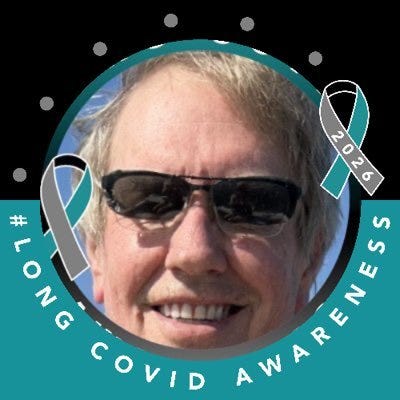
I should be wearing a mask for my emoji on X, but I was in the middle of a lake when I took this.